
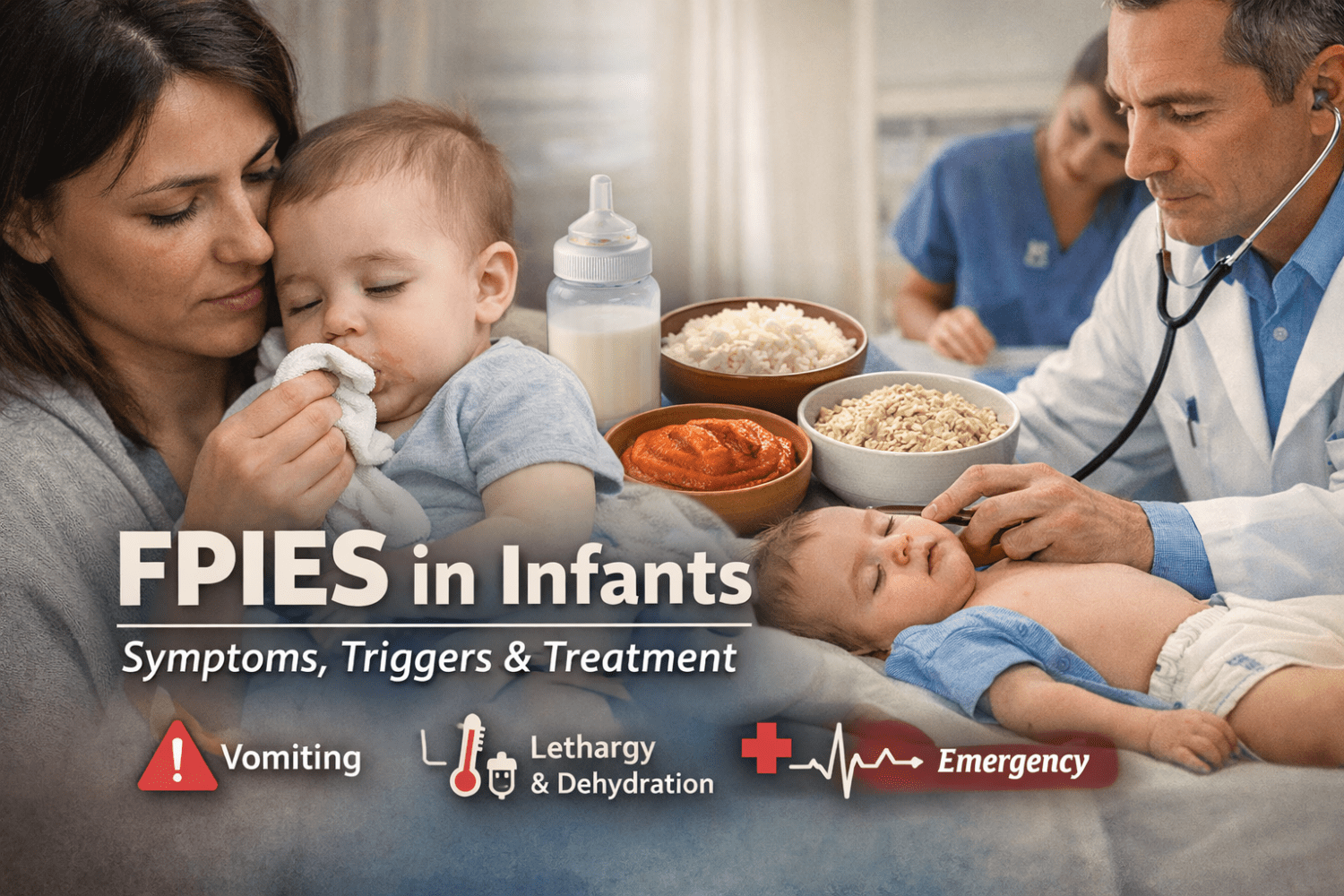
A Parent’s Question: Why Is My Baby Vomiting Hours After Eating?
 If your baby seems fine during feeding but begins repeated vomiting one to four hours later, you may be asking an important question: Could this be a food allergy?
One possible cause is Food Protein Induced Enterocolitis Syndrome, commonly known as FPIES. This is a non IgE mediated food allergy that primarily affects infants and young children and often presents in a way that can be confusing and concerning for families.
This guide explains what FPIES is, how to recognize symptoms, what foods commonly trigger reactions, and how to manage it safely.
What Is FPIES?
FPIES is a non IgE mediated, cell mediated gastrointestinal food allergy. Unlike typical food allergies that cause immediate symptoms such as hives or breathing difficulty, FPIES reactions are delayed and primarily affect the digestive system.
Symptoms typically begin one to four hours after ingestion of a trigger food and can range from mild to severe.
According to the American Academy of Allergy, Asthma and Immunology, FPIES is a recognized form of food allergy that requires careful diagnosis based on clinical history because there are no specific laboratory tests available to confirm it.
Common FPIES Symptoms in Infants
The hallmark symptom of acute FPIES is repetitive vomiting that begins one to four hours after eating a trigger food. However, symptoms can vary in severity.
Mild Symptoms
- One to three episodes of vomiting
- Mild diarrhea
- Temporary fussiness
Moderate Symptoms
- Repetitive vomiting
- More significant diarrhea
- Noticeable lethargy
- Reduced activity
Severe Symptoms
- Persistent vomiting
- Severe lethargy or limpness
- Pale or gray skin tone
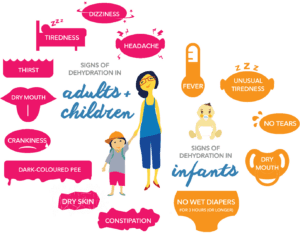
- Signs of dehydration
- Hypovolemia or shock in rare but serious cases
Severe reactions require immediate medical attention. Parents should call 911 if symptoms include extreme lethargy or signs of shock.
Common FPIES Food Triggers
FPIES can be triggered by a wide range of foods. Some infants react to only one food, while others may have multiple triggers.
Most Common Triggers
- Cow milk
- Soy
- Rice
- Oats
Other Possible Triggers
- Egg
- Fruits and vegetables
- Poultry or fish
- Peanuts and tree nuts in some cases
Each child is unique, and identifying triggers requires careful observation and guidance from an allergy specialist.
How Is FPIES Diagnosed?
Unlike IgE mediated food allergies, there is no specific blood test or skin test that confirms FPIES. Diagnosis is based on a detailed medical history and symptom pattern.
Clinicians look for:
- Repetitive vomiting 1 to 4 hours after eating
- Absence of immediate allergic symptoms such as hives
- Resolution of symptoms when the trigger food is avoided
In some cases, an oral food challenge may be performed under medical supervision to confirm the diagnosis.
When Is Allergy Testing Helpful?
Skin or blood testing may still be recommended in certain situations:
- Children with moderate to severe eczema
- Suspected allergy to egg, milk, peanut, tree nuts, or sesame
- Children with known IgE mediated food allergies to other foods
This helps assess the risk of immediate allergic reactions, which can sometimes coexist with FPIES.
Understanding FPIES Phenotypes
FPIES can present in different patterns:
Infantile Onset
Most cases begin in infancy, often when formula or solid foods are introduced.
Acute FPIES
Symptoms occur after intermittent ingestion of a trigger food.
Chronic or Acute on Chronic FPIES
Occurs with frequent exposure to a trigger food, leading to ongoing symptoms.
Atypical FPIES
Some children develop IgE sensitization to the same food. This occurs in a minority of cases and does not clearly predict long term outcomes.
Research shows that sensitization rates vary by food type, with higher rates seen in egg, milk, and nuts compared to grains, fruits, and vegetables.

Managing FPIES focuses on avoiding trigger foods and responding appropriately to reactions.
At Home for Mild Symptoms
- Use anti-nausea medication if prescribed
- Wait about 20 minutes after vomiting before offering fluids
- Monitor closely for signs of dehydration
When to Seek Medical Care
- Repetitive vomiting or worsening symptoms
- Moderate lethargy
- Inability to keep fluids down
Emergency Care for Severe Symptoms
- Call 911 immediately
- Seek urgent care for lethargy, dehydration, or shock
Intravenous fluids and medications may be required in severe cases.
Can Children Outgrow FPIES?
The outlook for FPIES is generally favorable. Many children outgrow the condition during early childhood.
Studies from the National Institute of Allergy and Infectious Diseases indicate that tolerance often develops over time, especially for common triggers like milk and soy.
Some children with mild milk or egg FPIES may tolerate these foods when baked. In carefully selected cases, gradual reintroduction at home may be considered under guidance from a specialist.
Is There a Risk of Developing Other Food Allergies?
A small percentage of children with FPIES may develop IgE mediated food allergies. However, research shows that:
- The rate of IgE sensitization in FPIES is relatively low
- There is no clear link between sensitization and persistence of FPIES
- Switching from FPIES to classic food allergy is uncommon
Close monitoring by an allergy specialist helps guide safe dietary progression.
When Should You See an Allergy Specialist?
If your child has repeated vomiting episodes after eating or has been diagnosed with FPIES, specialist care is important.
An experienced allergy team can:
- Confirm the diagnosis
- Identify trigger foods
- Create a safe feeding plan
- Guide food reintroduction
For expert care and support, visit www.vallenallergyasthma.com
For education and advocacy resources, visit www.nefoodallergy.org
Key Takeaways for Parents
- FPIES is a non IgE mediated food allergy that affects the gastrointestinal system
- Symptoms are delayed and often include repetitive vomiting 1 to 4 hours after eating
- Common triggers include milk, soy, rice, and oats
- Diagnosis is based on history rather than lab testing
- Most children outgrow FPIES with proper management
- Severe symptoms require immediate medical attention
How To Take Action
If your child is experiencing unexplained vomiting after meals or has been diagnosed with FPIES, early evaluation can make a significant difference in safety and quality of life.
Schedule a consultation with an allergy specialist today at www.vallenallergyasthma.com
Learn more about food allergy education and family support at www.nefoodallergy.org
References
- American Academy of Allergy, Asthma and Immunology. Food Protein Induced Enterocolitis Syndrome guidelines
- National Institute of Allergy and Infectious Diseases. Food allergy research and clinical guidance
- Nowak-Wegrzyn A et al. International consensus guidelines for the diagnosis and management of FPIES. Journal of Allergy and Clinical Immunology
- American College of Allergy, Asthma and Immunology. FPIES overview and patient guidance


