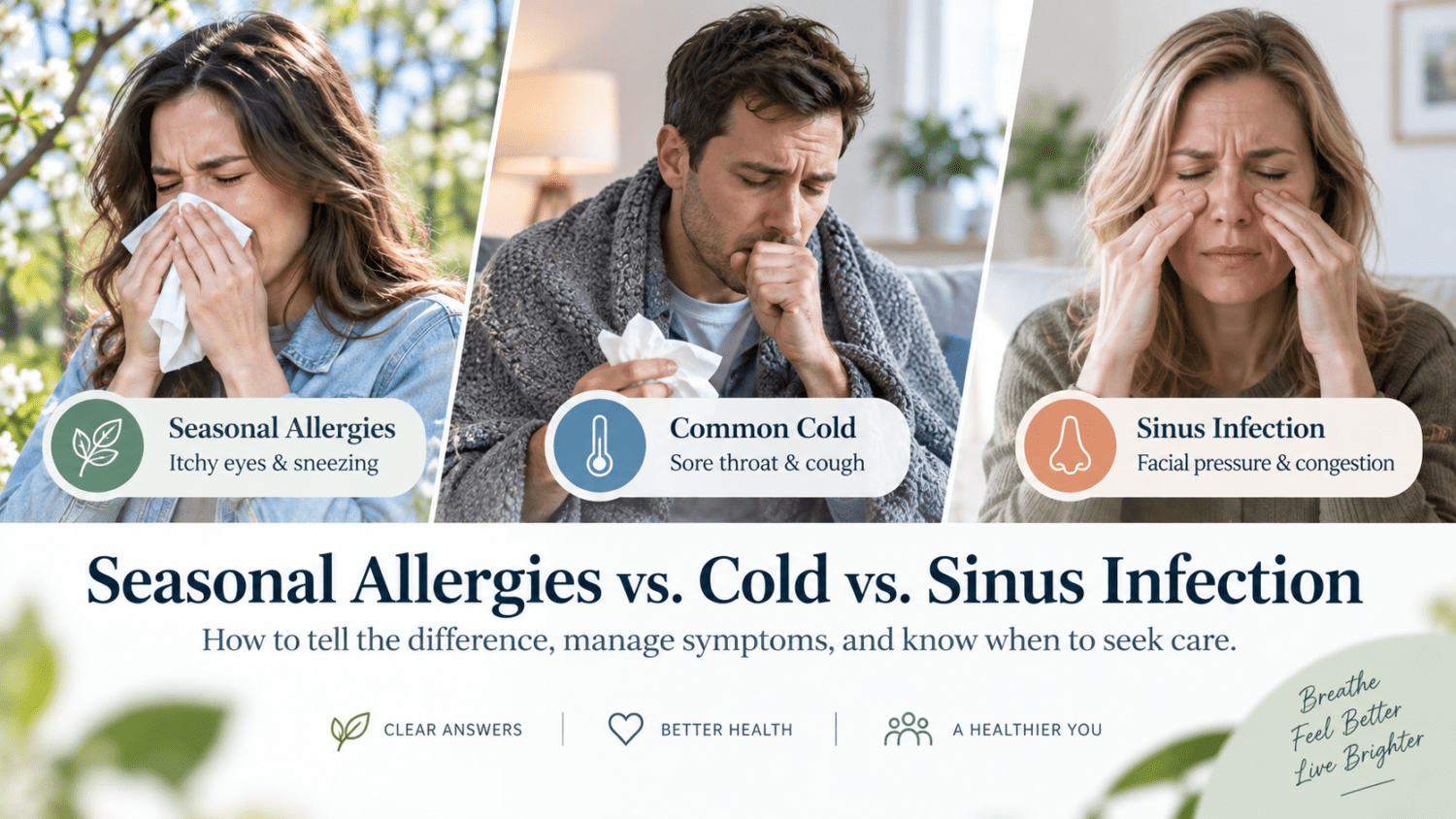
Seasonal Allergies vs. Cold vs. Sinus Infection: How to Tell the Difference
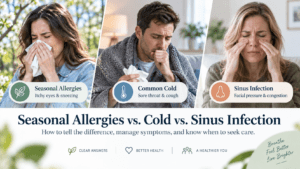 Is your stuffy nose caused by seasonal allergies, a cold, or a sinus infection?
It is a common question, especially during spring and fall allergy seasons. Seasonal allergies, the common cold, and sinus infections can all cause congestion, a runny nose, sinus pressure, coughing, and fatigue. Because the symptoms overlap, it is not always easy to know what is making you feel sick.
However, there are some important differences. Itchy or watery eyes often point toward allergies. A sore throat and mild fever may suggest a viral cold. Facial pain, worsening pressure, and symptoms lasting more than 10 days can raise concern for sinusitis.
Understanding the differences between seasonal allergies vs. a cold vs. a sinus infection can help you decide how to manage your symptoms and when it may be time to see an allergy or healthcare specialist.
If nasal congestion, sneezing, or recurring sinus symptoms are affecting your quality of life, the specialists at Valley Allergy & Asthma can help determine whether allergies may be contributing to your symptoms.
What Is a Sinus Infection?
A sinus infection, also called sinusitis, occurs when the tissue lining the sinuses becomes inflamed and swollen. This inflammation can prevent mucus from draining normally and lead to congestion, facial pressure, and other symptoms.
Although people often assume sinus infections are bacterial, most acute sinus infections are caused by viruses. According to the CDC, viruses cause the majority of sinus infections, and many cases improve without antibiotics. (CDC)
A previous cold, seasonal allergies, nasal polyps, smoking, and certain structural problems within the nose may increase a person’s risk of sinusitis. (CDC)
Common Symptoms of a Sinus Infection
Sinus infection symptoms may include:
- Facial pain, tenderness, or pressure
- Nasal congestion
- Thick nasal drainage
- Postnasal drip
- Headache
- Cough
- Fatigue
- Reduced sense of smell or taste
- Dental or upper tooth pain
- Fever in some cases
Facial pain or pressure around the cheeks, forehead, nose, or eyes is particularly common with acute sinusitis. (Mayo Clinic)
The duration and pattern of your symptoms can also provide an important clue. The CDC recommends medical evaluation when sinus symptoms last longer than 10 days without improving, become worse after initially getting better, or are accompanied by severe facial pain or persistent fever. (CDC)
What Are Seasonal Allergies?
Seasonal allergies, also known as seasonal allergic rhinitis or hay fever, are different from colds and sinus infections because they are not caused by an infection.
Allergies occur when your immune system reacts to normally harmless substances called allergens. Common seasonal allergy triggers include tree pollen, grass pollen, and weed pollen. Other people may experience year-round allergic symptoms from triggers such as dust mites, mold, or pet dander.
When your immune system encounters an allergen, it releases chemicals that contribute to inflammation and symptoms such as sneezing, itching, and nasal congestion.
Common Symptoms of Seasonal Allergies
Seasonal allergy symptoms commonly include:
- Frequent sneezing
- Clear runny nose
- Nasal congestion
- Itchy nose or throat
- Itchy or watery eyes
- Postnasal drip
- Cough caused by throat irritation or drainage
According to the American Academy of Allergy, Asthma & Immunology, itching of the nose, throat, mouth, or eyes is a common sign of allergic rhinitis. (AAAAI)
Itchy, watery eyes can be especially helpful when comparing allergies vs. a sinus infection because significant itching is much more typical of allergies. (Mayo Clinic News Network)
Unlike a cold, seasonal allergy symptoms can continue for weeks or return whenever you are exposed to the allergen.
If allergies regularly interfere with sleep, work, school, exercise, or outdoor activities, consider scheduling an evaluation with Valley Allergy & Asthma. Identifying your specific triggers can make it easier to build an effective long-term treatment plan.
What Is the Common Cold?
The common cold is a viral infection of the upper respiratory tract.
Cold symptoms often develop gradually and usually resolve on their own. The CDC notes that most people with cold symptoms do not require specific medical treatment and that antibiotics do not work against the viruses that cause colds. (CDC)
Common Symptoms of a Cold
Cold symptoms may include:
- Runny or stuffy nose
- Sneezing
- Sore throat
- Cough
- Mild headache
- Fatigue
- Watery eyes
- Low-grade fever in some people
One difference between a cold and seasonal allergies is that sore throat and cough are more commonly associated with viral infections. Fever may also occur with a cold, while fever is generally not a feature of seasonal allergies. (Mayo Clinic)
Many uncomplicated colds gradually improve within about a week. Seek medical attention if symptoms last longer than 10 days without improvement, improve and then become worse again, or are accompanied by trouble breathing, dehydration, or prolonged fever. (CDC)
Cold vs. Allergies vs. Sinus Infection: Key Differences
When comparing seasonal allergies vs. a cold vs. a sinus infection, pay attention to the type of symptoms, how quickly they develop, and how long they last.
| Symptom | Seasonal Allergies | Common Cold | Sinus Infection |
| Sneezing | Very common | Common | Sometimes |
| Itchy eyes or nose | Very common | Uncommon | Uncommon |
| Watery eyes | Common | Sometimes | Uncommon |
| Clear runny nose | Common | Common | Possible early |
| Thick nasal drainage | Less typical | Possible | Common |
| Nasal congestion | Common | Common | Common |
| Sore throat | Sometimes from drainage | Common | Sometimes |
| Facial pain or pressure | Mild or possible | Uncommon | Common |
| Tooth pain | Uncommon | Uncommon | Possible |
| Fever | Uncommon | Sometimes | Sometimes |
| Symptoms longer than 10 days | Common with ongoing exposure | Less typical | Possible |
| Symptoms tied to pollen exposure | Common | No | No |
No single symptom can always provide a diagnosis. The overall pattern usually matters more than mucus color or any one symptom.
How Are Sinus Infections Treated?
Treatment depends on what is causing the sinusitis.
Many acute sinus infections are viral and improve with supportive care, including:
- Fluids
- Rest
- Saline nasal rinses or sprays
- Warm compresses
- Appropriate over-the-counter pain relievers
- Other symptom-relief medications recommended by your healthcare provider
Antibiotics are not automatically necessary.
Current CDC guidance notes that bacterial sinusitis is more likely when symptoms persist for more than 10 days without improvement, severe symptoms include a fever of 102°F or higher with facial pain or purulent drainage, or symptoms improve and then become significantly worse again. (CDC)
Your healthcare provider can determine whether antibiotics or another treatment is appropriate.
How Are Seasonal Allergies Treated?
Allergy treatment focuses on reducing exposure to allergens and controlling the body’s allergic response.
Depending on your symptoms, treatment may include:
- Antihistamines
- Corticosteroid nasal sprays
- Antihistamine nasal sprays
- Saline nasal rinses
- Environmental allergy control
- Prescription medications
- Allergy immunotherapy
AAAAI identifies nasal corticosteroid sprays, antihistamines, and other targeted medications as common approaches to treating allergic rhinitis. For selected patients, allergy shots or sublingual immunotherapy may provide longer-term relief. (AAAAI)
If over-the-counter allergy medication is no longer controlling your symptoms, an allergist can help identify your triggers and determine whether allergy testing or immunotherapy may be appropriate.
Learn more about allergy evaluation, asthma, and treatment options through Valley Allergy & Asthma.
How Is a Cold Treated?
There is no specific cure for the common cold, but most people recover without medical treatment.
Supportive care may include:
- Rest
- Drinking plenty of fluids
- Saline nasal spray
- Appropriate pain or fever medication
- Humidified air
- Other over-the-counter cold medications when appropriate
Antibiotics should not be used to treat an uncomplicated cold because antibiotics do not treat viruses. (CDC)
Cold-like symptoms can also occur with influenza, COVID-19, and other respiratory infections, so testing or medical evaluation may be appropriate based on your symptoms and risk factors.
Can Allergies Lead to Sinus Infections?
Allergies do not turn into a sinus infection, but persistent allergic inflammation can contribute to sinus problems.
Seasonal allergies can cause inflammation and swelling inside the nose. That swelling may interfere with normal sinus drainage, which can create conditions that make sinusitis more likely.
The CDC lists seasonal allergies as one of the factors associated with an increased risk of developing sinus infections. (CDC)
For people who experience repeated episodes of sinusitis, identifying and controlling underlying allergies may therefore be an important part of treatment.
When Should You See an Allergist or Healthcare Provider?
Consider seeking professional care if:
- Symptoms last longer than 10 days without improving
- Symptoms improve and then suddenly worsen
- You experience severe facial pain or pressure
- Fever continues for several days
- Allergy symptoms persist for weeks
- Over-the-counter allergy medications no longer help
- Symptoms repeatedly return during the same seasons
- You frequently develop sinus infections
- Symptoms interfere with sleep, school, work, or everyday activities
Seek prompt medical attention for serious symptoms such as trouble breathing, significant swelling or redness around the eyes, vision changes, confusion, severe headache, stiff neck, or other rapidly worsening symptoms. (Mayo Clinic)
For persistent or recurring allergy symptoms, Valley Allergy & Asthma provides specialized evaluation and treatment designed to identify triggers and develop a personalized allergy management plan.
For additional patient education about food allergies, allergy awareness, and community resources, visit the New England Food Allergy Treatment Center.
Frequently Asked Questions About Seasonal Allergies vs. Cold vs. Sinus Infection
How can I tell if I have a sinus infection or allergies?
Allergies commonly cause sneezing, itching, clear nasal drainage, and itchy or watery eyes. Sinusitis is more likely to cause significant facial pain or pressure, congestion, reduced smell, and thicker nasal drainage. Symptoms lasting more than 10 days without improvement can also increase concern for sinusitis.
How do I know if my symptoms are seasonal allergies, a cold, or a sinus infection?
Look at both the symptoms and their timing. Itchy eyes and repeated sneezing strongly suggest allergies. Sore throat, cough, and mild fever are more typical of a cold. Persistent congestion combined with facial or dental pain, especially when symptoms last longer than 10 days or worsen after improving, may indicate sinusitis.
Can a sinus infection turn into allergies?
No. Allergies and sinus infections are different conditions. Allergies result from an immune reaction to allergens, while sinusitis involves inflammation of the sinus passages and is often associated with a viral infection. However, uncontrolled allergies can increase the likelihood of developing sinus problems.
Do I need antibiotics for a sinus infection?
Not necessarily. Most acute sinus infections are viral, and antibiotics do not treat viruses. Your healthcare provider may consider antibiotics when the symptom pattern suggests a bacterial infection. (CDC)
What allergy medications are available?
Depending on your symptoms and medical history, options may include antihistamines, corticosteroid nasal sprays, antihistamine nasal sprays, decongestants, or other medications. People with persistent allergies may also benefit from allergy testing and immunotherapy.
at allergies or a sinus infection at home?
Mild symptoms can often be managed with measures such as fluids, saline nasal rinses, allergen avoidance, and appropriate over-the-counter medications. Persistent, worsening, or severe symptoms should be evaluated by a healthcare provider.
Get Help Identifying the Cause of Your Symptoms
You do not have to spend allergy season wondering whether your congestion is caused by pollen, a cold, or another sinus problem.
If sneezing, congestion, sinus pressure, postnasal drip, or recurring sinus infections are disrupting your daily life, a professional allergy evaluation can help identify the underlying cause and guide the right treatment.
Visit Valley Allergy & Asthma to learn more about allergy testing, seasonal allergy treatment, asthma care, and individualized treatment options.
For additional allergy education and patient resources, visit the New England Food Allergy Treatment Center.
Medical Sources and References
Centers for Disease Control and Prevention. Sinus Infection Basics. (CDC)
Centers for Disease Control and Prevention. Manage Common Cold. (CDC)
Centers for Disease Control and Prevention. Outpatient Clinical Care for Adults. (CDC)
American Academy of Allergy, Asthma & Immunology. Hay Fever and Allergic Rhinitis. (AAAAI)
Mayo Clinic. Acute Sinusitis: Symptoms and Causes. (Mayo Clinic)
Mayo Clinic. Cold or Allergy: Which Is It? (Mayo Clinic)
I also corrected two medically important SEO/content points from the source copy: most sinus infections are viral rather than bacterial, and mucus color alone does not establish that a sinus infection is bacterial. (CDC)


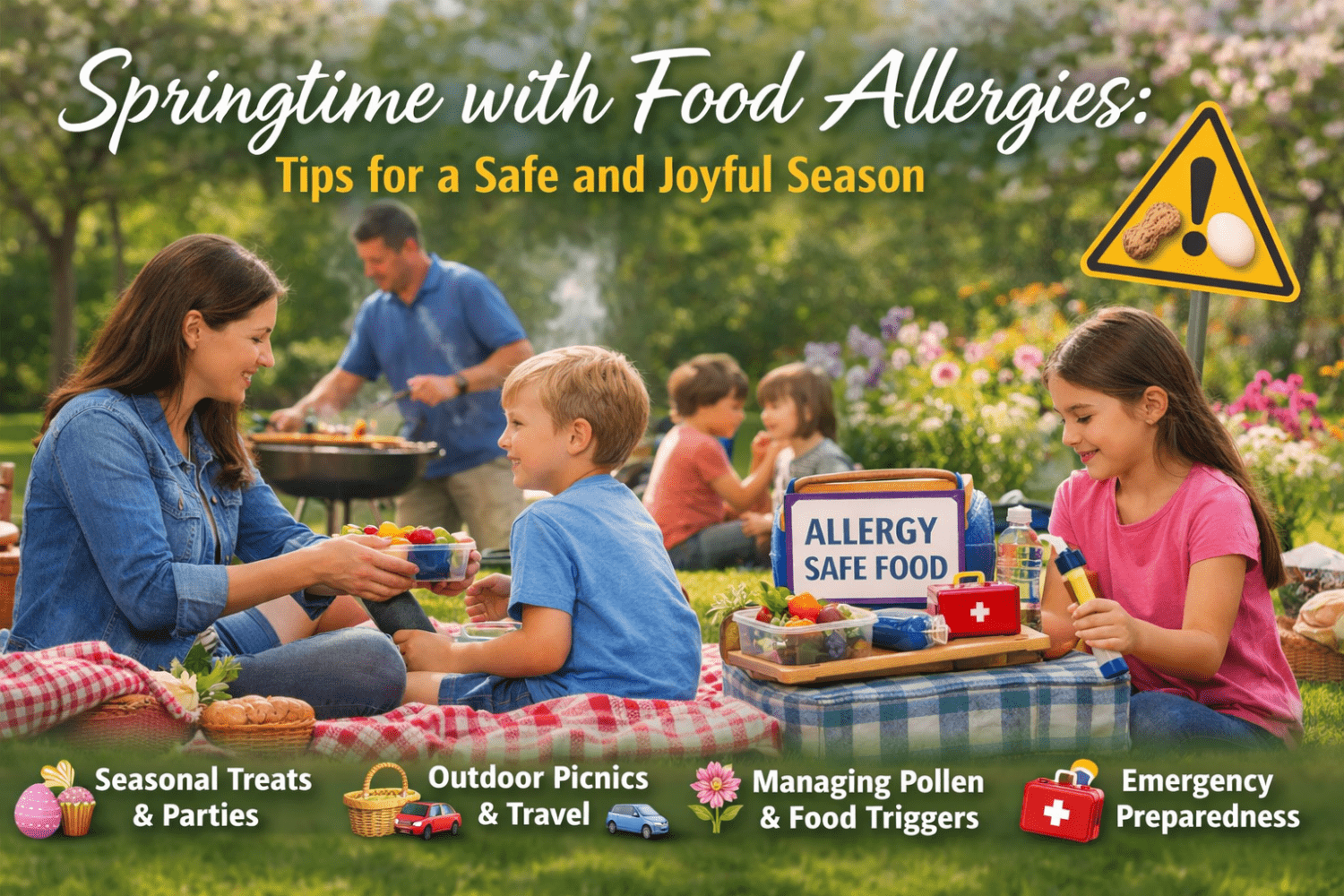
 Spring brings longer days, blooming flowers, and opportunities to gather with friends and family. But if you or your child has a food allergy, you may be asking: How can we stay safe during spring events, outdoor meals, and travel?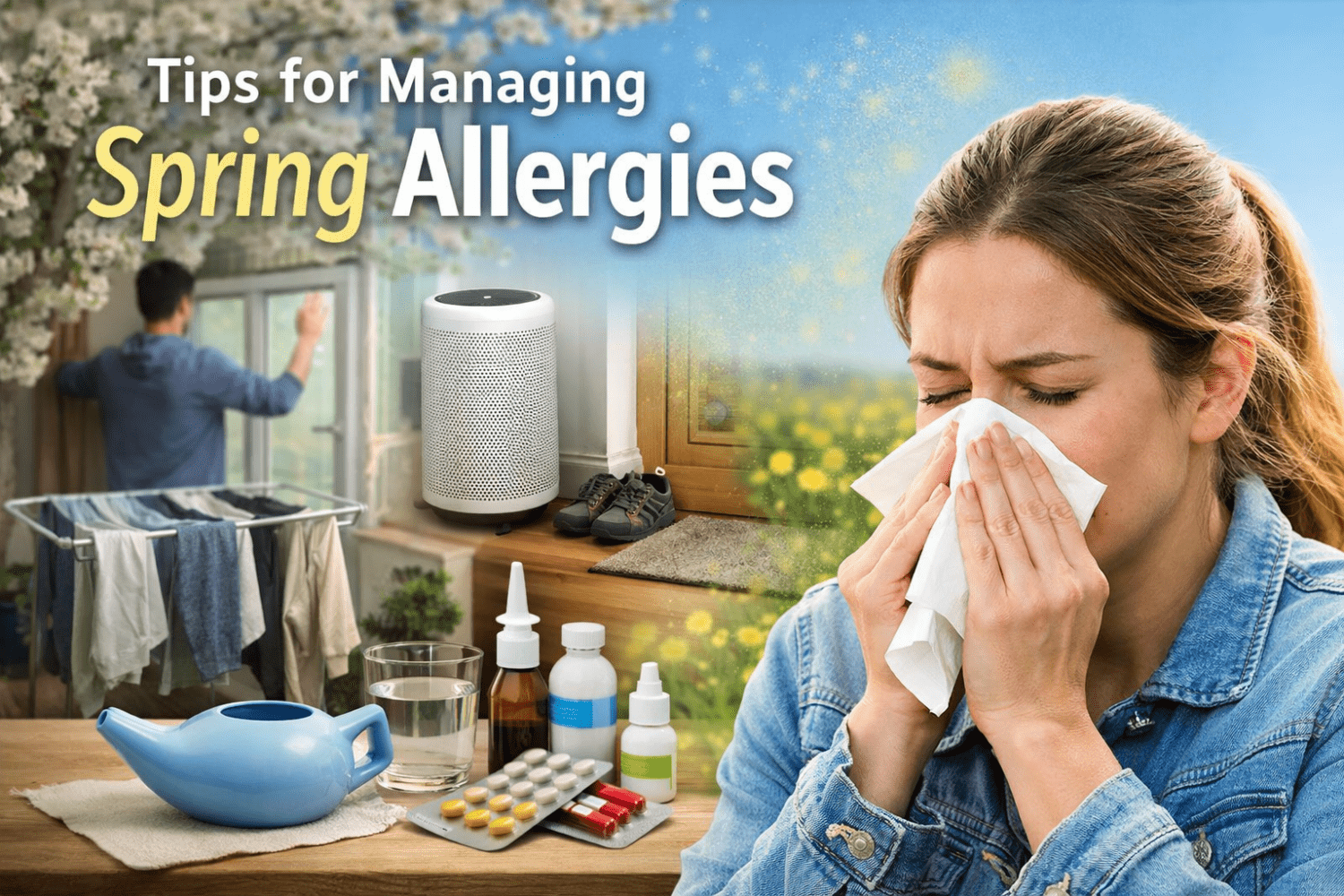
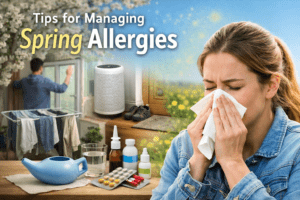 Spring brings warmer weather, blooming flowers, and longer days. But for millions of people, it also signals the start of seasonal allergy symptoms. If you find yourself sneezing, congested, or dealing with itchy eyes, you are not alone. According to the Centers for Disease Control and Prevention, allergies affect roughly one in three adults in the United States, making them one of the most common chronic conditions.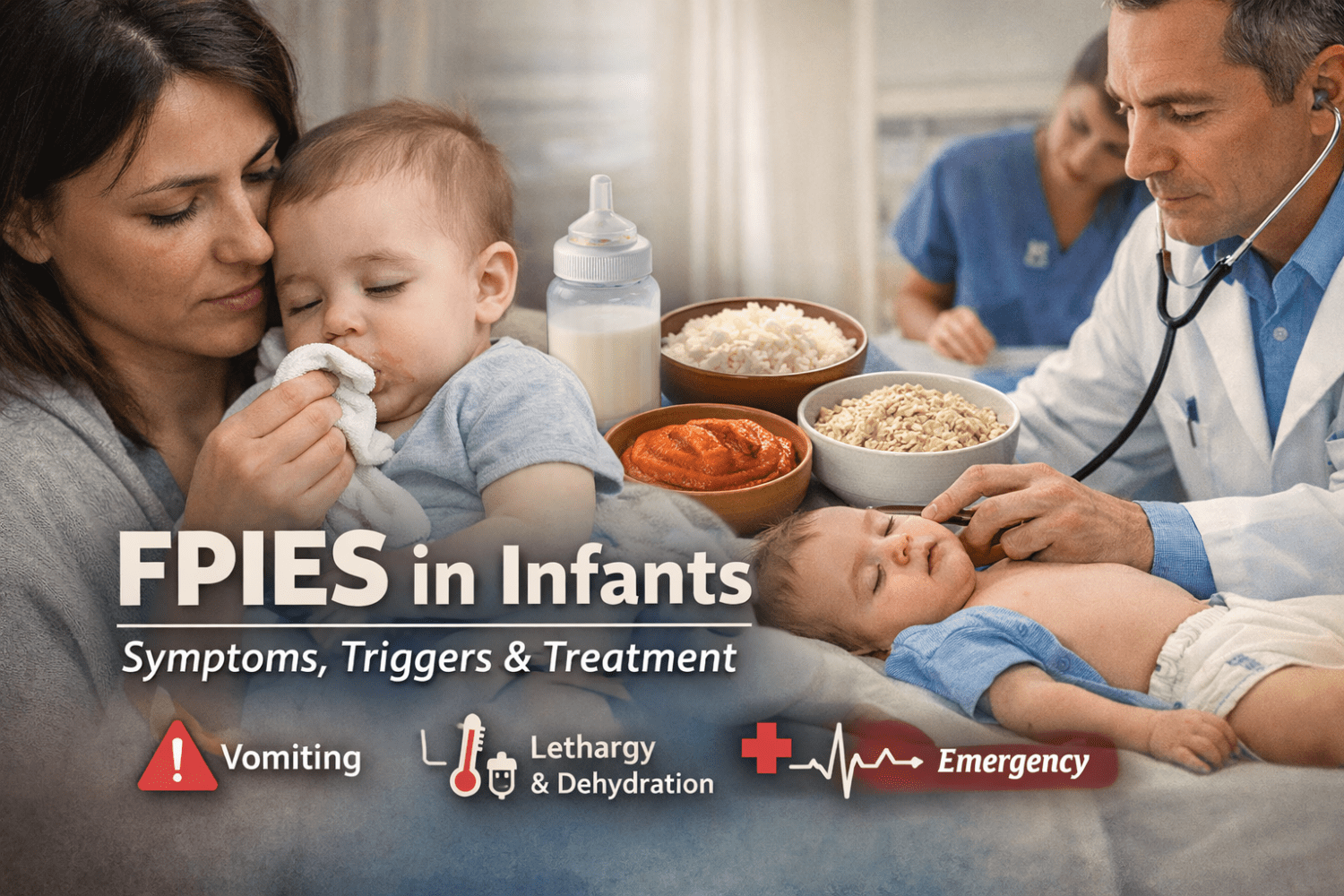
 If your baby seems fine during feeding but begins repeated vomiting one to four hours later, you may be asking an important question: Could this be a food allergy?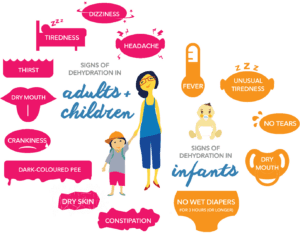


 Longer days and warmer temperatures are welcome signs of spring. But for many people, spring also brings sneezing, congestion, and itchy eyes. If you’ve ever wondered, “How can I prevent spring allergy symptoms before they start?” you’re not alone. Tree pollen season begins earlier than many expect, and preparation is key to staying ahead of symptoms.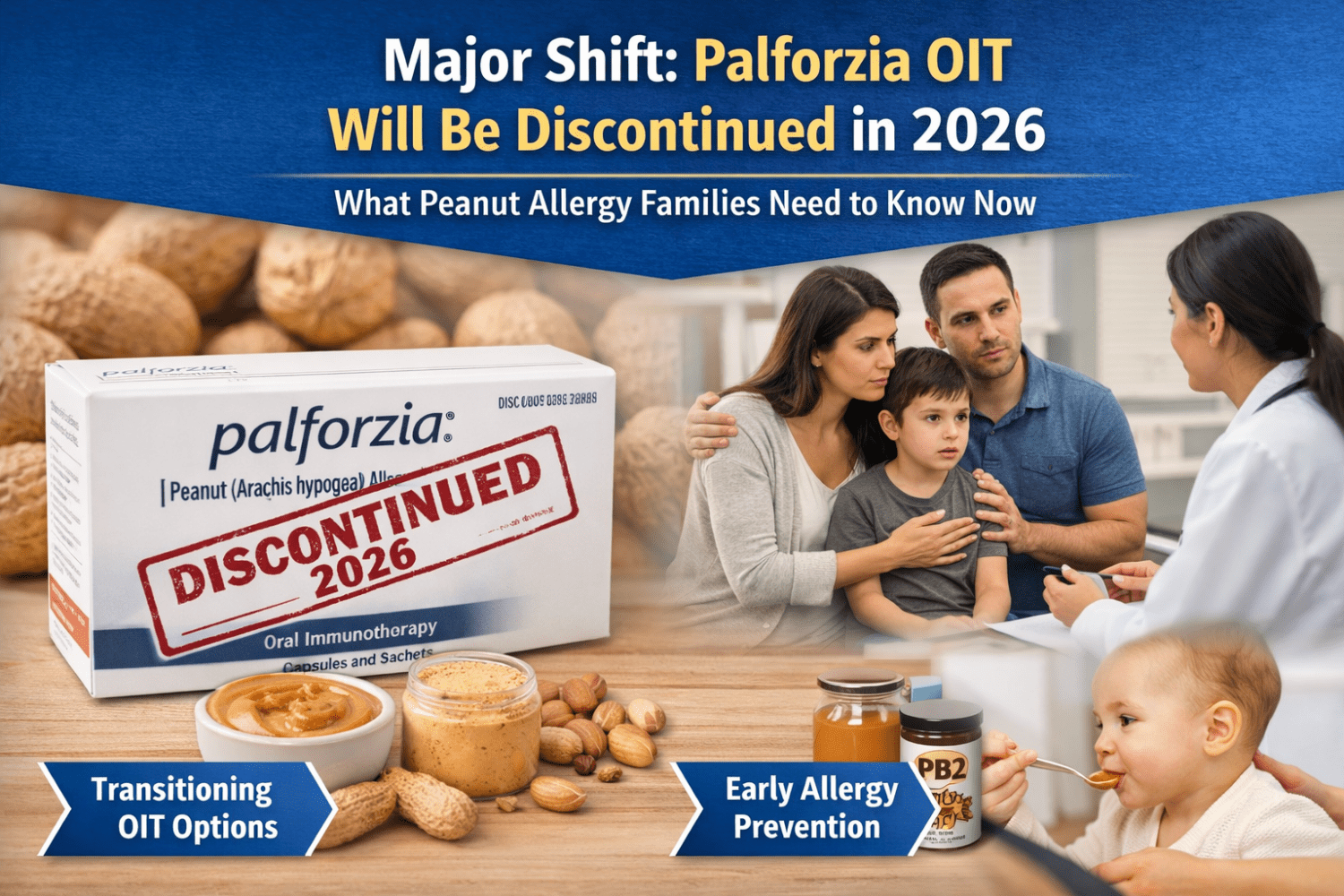
 If your child is receiving Palforzia for peanut allergy, you may be asking: What happens when Palforzia is discontinued? What are our options? Is oral immunotherapy still possible?