
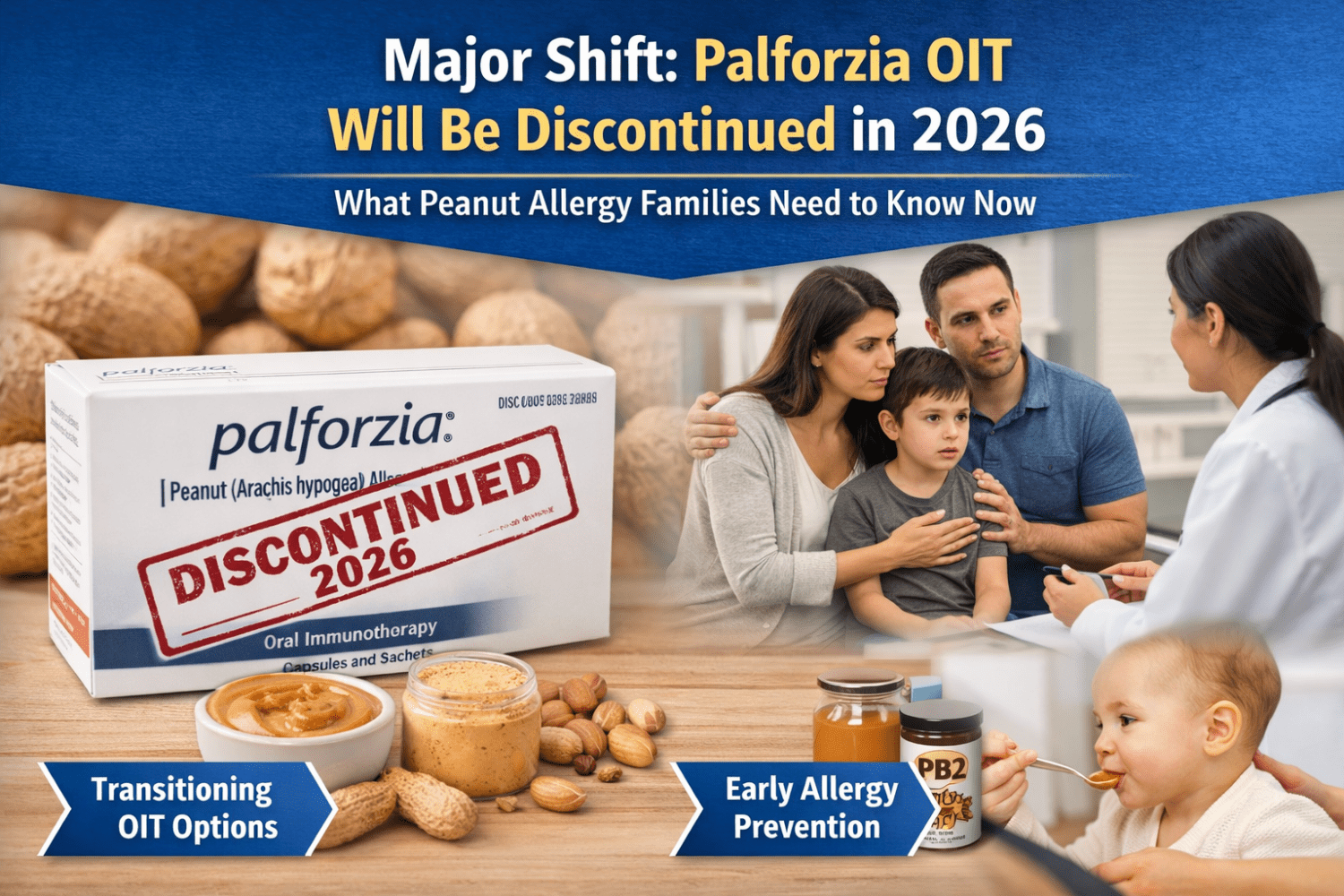
Major Shift: Palforzia OIT Will Be Discontinued in 2026
What Peanut Allergy Families Need to Know Now
 If your child is receiving Palforzia for peanut allergy, you may be asking: What happens when Palforzia is discontinued? What are our options? Is oral immunotherapy still possible?
These are important and timely questions. Palforzia, the first FDA approved oral immunotherapy for peanut allergy, will be phased out in July 2026. For many families, this news creates uncertainty. However, there are safe, evidence based pathways forward, and the science behind peanut allergy treatment and prevention continues to evolve.
This article explains what the discontinuation means, how patients can safely transition, and what new research says about early peanut introduction and allergy prevention.
What Is Palforzia and Why Is It Being Discontinued?
Palforzia is a standardized peanut allergen powder approved by the U.S. Food and Drug Administration in 2020 for children ages 4 to 17 with confirmed peanut allergy. It was the first FDA approved oral immunotherapy designed to reduce the risk of severe allergic reactions from accidental peanut exposure.
Palforzia works by gradually exposing the immune system to small, controlled amounts of peanut protein over time. This process helps build tolerance and lowers the risk of a severe reaction after accidental ingestion. It does not cure peanut allergy, but it can significantly reduce risk.
Although Palforzia marked a milestone in food allergy treatment, the manufacturer has announced it will be discontinued in July 2026. While this change affects product availability, it does not mean that oral immunotherapy is no longer an option. In fact, many allergists have long used carefully measured store bought peanut products in supervised oral immunotherapy protocols.
I Am on Palforzia. What Should I Do?
If your child is currently on Palforzia, do not stop treatment without speaking to your allergist. Abrupt discontinuation can increase risk of losing tolerance.
Many patients can transition from Palforzia to a measured store bought peanut product such as peanut butter or powdered peanut products like PB2 under physician supervision. Clinical research has demonstrated that peanut oral immunotherapy using peanut flour or peanut butter can effectively maintain desensitization when dosing is consistent and medically supervised.
The New England Food Allergy Treatment Center welcomes peanut allergic patients who need guidance transitioning from Palforzia. Our team can help design an individualized plan to maintain protection using commercially available peanut products while ensuring safety and ongoing monitoring.
Published data from landmark studies such as the PALISADE trial, published in The New England Journal of Medicine, demonstrated that peanut oral immunotherapy significantly increased the amount of peanut protein tolerated by allergic children compared to placebo. These findings continue to guide clinical practice even as branded formulations evolve.
Is Oral Immunotherapy Still Supported by Research?
Yes. Oral immunotherapy remains supported by strong evidence. The PALISADE study showed that 67 percent of treated participants tolerated at least 600 mg of peanut protein compared to 4 percent in the placebo group.
Professional organizations such as the American Academy of Allergy, Asthma & Immunology recognize oral immunotherapy as a treatment option when delivered in experienced medical settings. Ongoing research continues to refine dosing, safety protocols, and long term maintenance strategies.
Palforzia’s discontinuation does not reverse the scientific progress made in peanut immunotherapy. Instead, it highlights the need for experienced allergy specialists to guide families through individualized treatment plans.
New Prevention Insights: Early Feeding Matters
While treatment options evolve, prevention science continues to advance.
Groundbreaking research from the Learning Early About Peanut Allergy trial demonstrated that early peanut introduction in high risk infants reduced the development of peanut allergy by up to 81 percent. These findings led the National Institute of Allergy and Infectious Diseases to issue guidelines recommending peanut introduction around 4 to 6 months of age in appropriate infants.
Since those guideline changes, modeling studies estimate that tens of thousands of peanut allergy cases in the United States have been prevented.
Emerging international research continues to reinforce this approach. Recent Canadian data in 2026 reported that infants introduced to allergenic foods such as peanuts, eggs, and fish between 4 and 6 months were significantly less likely to develop food allergies later in childhood. These findings align with previous evidence that delaying allergenic foods may increase risk rather than reduce it.
Parents should consult their pediatrician or allergist before introducing peanut if their infant has severe eczema or existing food allergy. However, for most infants, early introduction is now considered protective.
What Does This Mean for Families Today?
If you are currently on Palforzia:
- Do not discontinue abruptly
• Schedule a consultation with your allergist
• Discuss transitioning to a supervised peanut product protocol
If you have a newly diagnosed peanut allergy:
- Oral immunotherapy remains a viable treatment option
• Individualized protocols using peanut products may be available
• Shared decision making with an experienced allergist is essential
If you have an infant:
- Ask your pediatrician about early allergen introduction
• Consider peanut introduction around 4 to 6 months if appropriate
The discontinuation of Palforzia marks the end of a chapter in food allergy treatment, but not the end of progress. Its legacy continues to inform safer and more accessible oral immunotherapy strategies. At the same time, prevention efforts through early feeding are already reshaping the future of food allergy in children.
For families navigating peanut allergy treatment or prevention, evidence based guidance from experienced specialists remains the most important factor in achieving long term safety and peace of mind.
If your child is transitioning off Palforzia or you are exploring peanut oral immunotherapy options, the New England Food Allergy Treatment Center is available to provide personalized care and support during this transition.

