
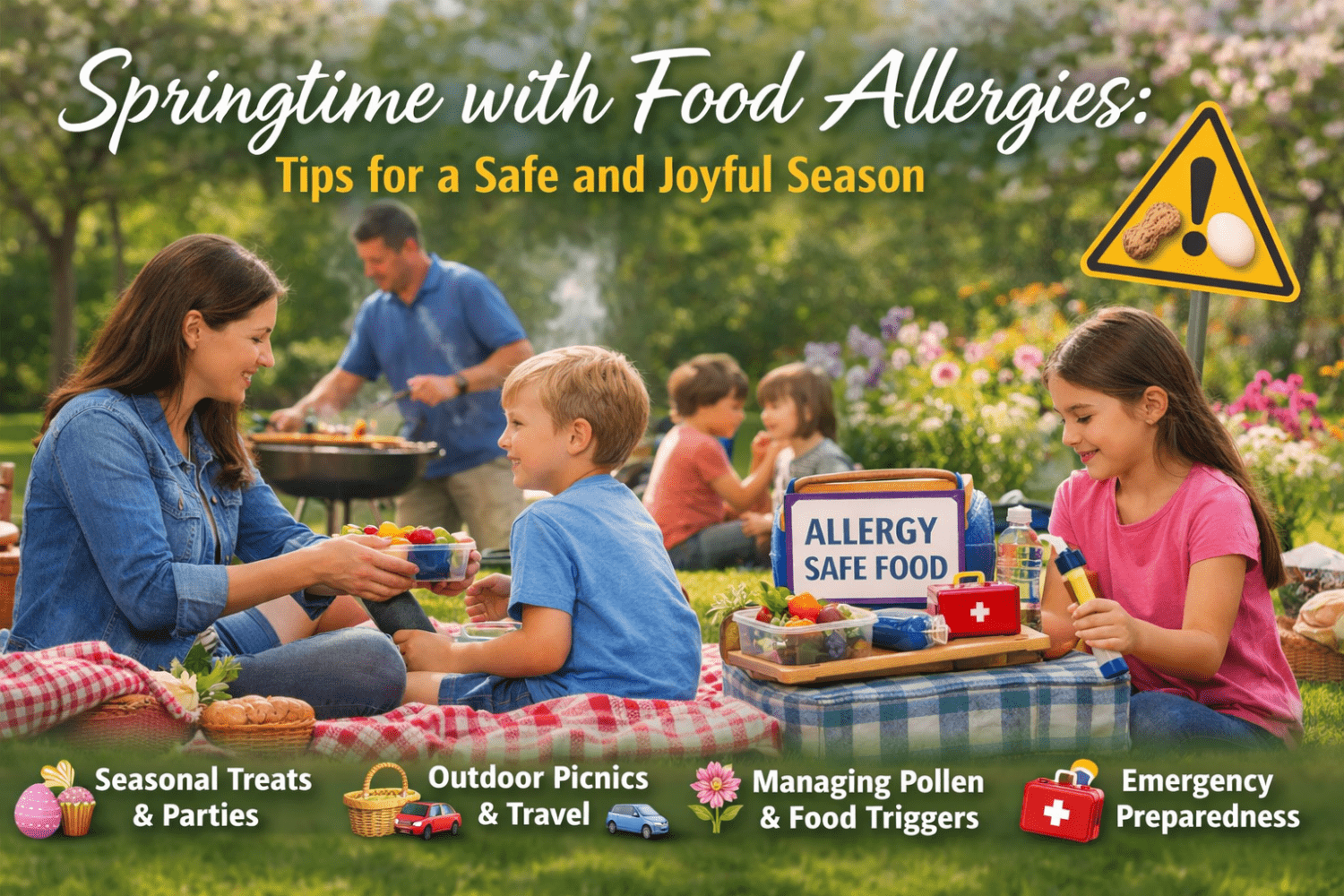
Springtime with Food Allergies: Tips for a Safe and Joyful Season
 Spring brings longer days, blooming flowers, and opportunities to gather with friends and family. But if you or your child has a food allergy, you may be asking: How can we stay safe during spring events, outdoor meals, and travel?
The good news is that with the right strategies, you can confidently enjoy everything the season has to offer. This guide covers practical, evidence based spring food allergy safety tips to help reduce risk and keep your family safe.
Why Spring Can Be Challenging for Food Allergies
Spring introduces new environments and routines. School celebrations, holiday treats, and outdoor dining can increase exposure to common allergens such as peanuts, tree nuts, milk, eggs, soy, wheat, fish, and shellfish.
According to the Food Allergy Research & Education, even trace amounts of allergens can trigger reactions in sensitive individuals. This makes planning and awareness especially important during seasonal activities.
Watch Out for Seasonal Treats
Spring holidays like Easter and school events often center around food. Many popular treats contain hidden allergens or pose a risk for cross contact.
Common risks include:
- Chocolate candies that contain milk or may be processed with nuts
- Homemade baked goods with unclear ingredient lists
- Imported or specialty candies with inconsistent labeling
Safety tips:
- Always read labels carefully, even on familiar products
- Look for precautionary statements like “may contain”
- Avoid foods without clear ingredient information
The U.S. Food and Drug Administration emphasizes that ingredient lists can change without notice, making label reading essential every time.
Outdoor Dining and Picnics
Eating outdoors is one of the best parts of spring, but it comes with less control over food preparation and surfaces.
Reduce risk with these strategies:
- Bring your own allergy safe meals and snacks
- Clean tables and surfaces before eating
- Use separate utensils and avoid shared serving tools
- Keep safe foods stored separately from others
Clear communication is critical. Ask how food was prepared and whether cross contact may have occurred.
Pollen and Food Allergy Confusion
Spring allergies can sometimes overlap with food allergy symptoms. A condition known as oral allergy syndrome or pollen food allergy syndrome can cause itching or tingling in the mouth after eating certain raw fruits and vegetables.
For example:
- Birch pollen allergies may react with apples or carrots
- Ragweed allergies may react with melons or bananas
The American Academy of Allergy Asthma & Immunology explains that these reactions are usually mild but should still be evaluated by an allergist.
What to do:
- Track symptoms and when they occur
- Avoid raw trigger foods if reactions happen
- Seek evaluation for new or unusual symptoms
Travel and Day Trips
Spring is a popular time for travel, whether it is a weekend getaway or a day trip.
Plan ahead to stay safe:
- Pack allergy safe snacks and meals
- Research restaurants and call ahead if needed
- Carry emergency medications at all times
- Keep epinephrine easily accessible, not packed away
The Centers for Disease Control and Prevention recommends always having an emergency action plan and medications readily available when traveling.
Spring Cleaning and Hidden Allergens
Spring cleaning is more than just tidying up. It is an opportunity to reduce hidden allergen risks in your home.
Focus on:
- Cleaning countertops, cabinets, and appliances thoroughly
- Checking pantry items for expired or unsafe products
- Replacing old or shared utensils that may carry allergens
- Organizing allergen free zones if needed
These steps are especially important for families managing multiple food allergies.
Celebrating Safely at Spring Events
Spring celebrations can still be fun and inclusive with a little preparation.
Ideas for safer celebrations:
- Create allergy friendly treat bags
- Offer non food items like stickers or small toys
- Communicate with hosts ahead of time
- Provide safe alternatives for your child
Proactive communication helps reduce anxiety and ensures everyone can participate safely.
When to See an Allergy Specialist
If you are unsure whether symptoms are related to food, pollen, or both, it is important to consult a specialist. An allergist can perform testing, review your history, and develop a personalized management plan.
For expert guidance, visit:
These resources provide education, evaluation, and treatment options for families managing food allergies.
Additional Resources and Support
For more education and support, explore:
- Food Allergy Research & Education
- American Academy of Allergy Asthma & Immunology
You can also learn more and access helpful resources here:


